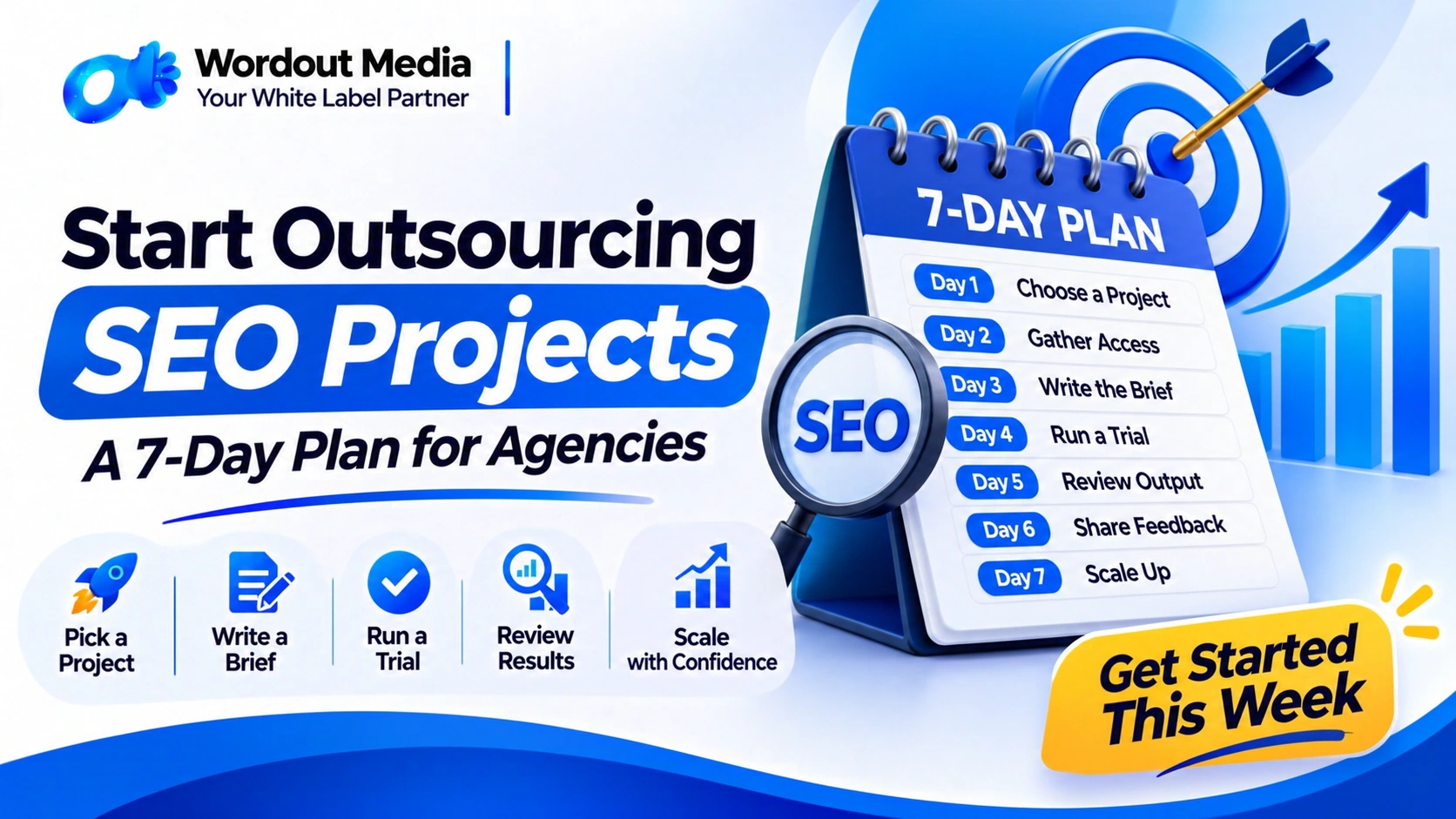
How do you start outsourcing SEO? Choose one repeatable SEO project (a technical audit is a good first pick), write a clear brief covering goals, access and deadline, test the partner with a small paid or free trial task, review the output against your own standards and then move one live client across. Most agencies can complete the first four steps in about a week.
Key takeaways
- Start with one project, not your whole book of clients.
- A clear brief is the cheapest quality control you have.
- Test before committing: Wordout Media offers an 8-hour free trial, with no contract or card.
- Keep strategy, client relationships and final review in-house.
- No provider can guarantee rankings, so judge process and output instead.
The Task That Never Gets Done
Every agency owner has one. It’s the SEO audit you promised a client two weeks ago. Or the keyword research for the new prospect. Or the batch of on-page fixes that sits at the bottom of the to-do list because something more urgent always shows up first.
SEO work is like that. It’s rarely urgent on any given day, but it’s relentless over a month. It needs steady attention from people who know what they’re doing, and in a small agency those people are usually busy doing five other things.
If that sounds familiar, this guide is for you. We’ll walk through how to start outsourcing SEO this week, not in some vague “someday” sense but with a day-by-day plan you can actually follow. Along the way we’ll cover what to hand off first, how to write a brief that gets good work back, how to test a partner safely, what to check in the output and what to avoid.
We’re Wordout Media, and SEO is one of the six services we deliver for agencies, so we have an obvious interest here. We’ll try to be as useful and honest as we can, including about when outsourcing SEO isn’t the right move.
What Does “Outsourcing SEO” Actually Mean?
Outsourcing SEO means paying an outside team to carry out search engine optimization tasks for you or your clients, instead of doing the work with your own staff. In an agency context it’s usually white label: the partner does the work, and everything carries your brand. Your client never sees the provider.
The kinds of SEO work that agencies commonly outsource include:
- Technical SEO audits
- Keyword research and mapping
- On-page optimization (titles, headings, content, internal links)
- Blog and content optimization
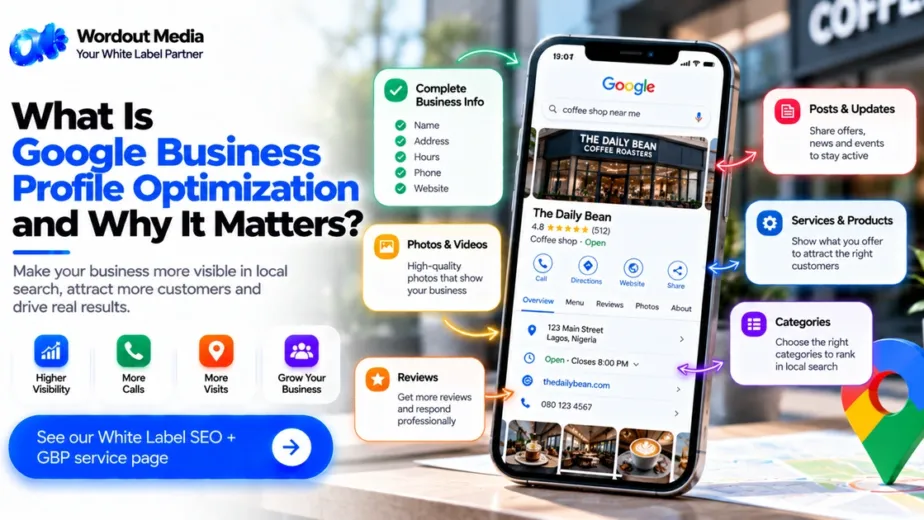
- Google Business Profile optimization and local SEO
- Reporting
- Ongoing monthly maintenance
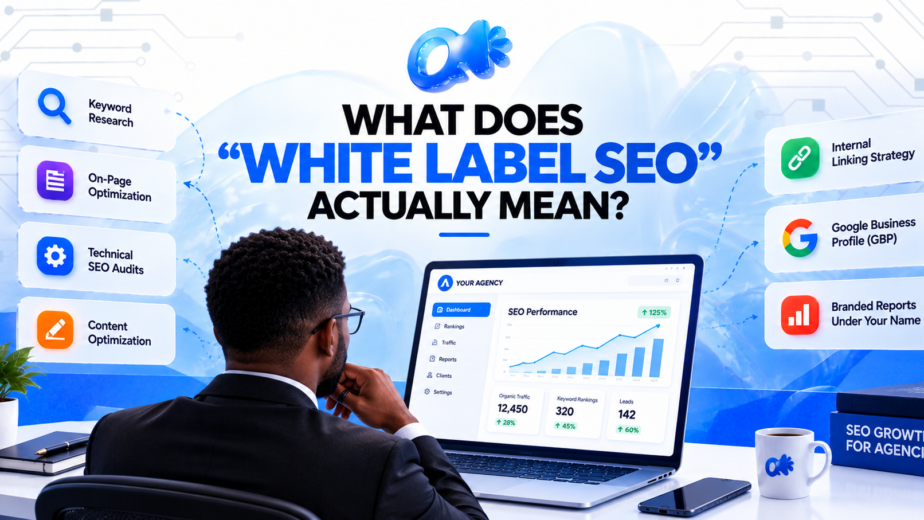
You can read more about the arrangement in What Does “White Label SEO” Actually Mean? and see our own scope on the White Label SEO + GBP page.
Should You Start Outsourcing SEO at All?
Let’s be fair before we sell anything. Outsourcing SEO is a good idea for some agencies and a poor one for others.
It’s probably a good fit if:
- You have more SEO demand than capacity.
- You offer other services (web, social, ads) and want to add SEO.
- You spend your own evenings on SEO production.
- Your SEO margins are thin because delivery is expensive.
- You’d like predictable, flexible capacity rather than another salary.
It may not be a good fit if:
- You have no SEO clients or prospects yet.
- You don’t have time to brief and review work.
- Your contracts prohibit third-party delivery.
- SEO is your core craft and your whole brand promise.
- You want a fully hands-off package with no input from you.
If you’re not sure, the reasons agencies outsource and our comparison of white label vs. in-house teams can help you decide.
What Should You Outsource First?
The best first project has four qualities. It’s repeatable, so you’ll do it again. It’s bounded, with a clear start and finish. It’s reviewable, so you can tell whether it’s good. And it’s low-risk, meaning a mistake won’t hurt a flagship client.
Here’s how common SEO tasks stack up as first projects:
| Task | Repeatable | Bounded | Easy to review | Good first project? |
|---|---|---|---|---|
| Technical SEO audit | Yes | Yes | Yes | Excellent |
| Keyword research and mapping | Yes | Yes | Moderately | Very good |
| On-page optimization of a few pages | Yes | Yes | Yes | Very good |
| Google Business Profile optimization | Yes | Yes | Yes | Very good |
| Blog post optimization | Yes | Yes | Moderately | Good |
| Ongoing monthly SEO retainer | Yes | No | Harder | Better as a second step |
| Full link-building campaign | Partly | No | Harder | Not as a first test |
Our recommendation: a technical SEO audit for a smaller client, or a Google Business Profile cleanup. Both give you a tangible deliverable, quickly, that you can judge without special tools.
The 7-Day Plan to Start Outsourcing SEO
Here’s a realistic schedule. You can stretch it if your week is full, but the sequence works.
Day 1: Choose the project and the client
Pick one SEO task for one client. Prefer a client who is easygoing and a project that won’t cause panic if it goes slowly. Write down in a sentence what success looks like: “A prioritized list of technical fixes the client can approve.”
Then decide your budget. For reference, our rate is $10 an hour, and illustrative estimates for common tasks are in Starter, Growth or Scale. A technical audit for a small site might take roughly 10 to 15 hours, depending on size and scope. The free trial of 8 hours is a natural place to begin.
Day 2: Gather access and context
Before you write a brief, collect what a specialist will need:
- The website URL and any staging site
- Access to analytics and Google Search Console (at least viewer access)
- Access to the Google Business Profile, if relevant
- The client’s goals, locations and main services
- Competitors you care about
- Any past SEO work, reports or known problems
- Brand and tone notes, if content is involved
Use shared, role-based email addresses for access where you can, and remove access when work ends. If you want to keep the arrangement invisible to the client, How to Keep White Label Work Invisible to Your Clients covers the details, such as what clients can see in user lists.
Day 3: Write the brief
This is the most important day. A good SEO brief is short and specific. Here’s a template you can copy.
SEO project brief template
- Client and site: name, URL, industry and locations
- Project: (e.g., technical SEO audit, keyword map, on-page updates for 5 pages)
- Goal: what you want to achieve (e.g., fix crawl issues, improve local visibility, target specific services)
- Priority pages or services: which matter most
- Target audience and geography
- Known issues or history: migrations, penalties, previous agencies
- Access provided: list everything and who holds it
- Deliverable format: spreadsheet, document, slide deck, in your branding
- Deadline: with flexibility noted
- Review process: who reviews and how feedback will be sent
- Constraints: budgets, tools, things not to change
- What “done” looks like
A few lines on each point is plenty. Briefs that include examples (a past report you liked, a competitor you admire) get much better results than abstract descriptions.
Day 4: Run the test
Send the brief to your partner. At Wordout Media, you’re assigned a dedicated account manager who reviews the brief, asks any clarifying questions and passes the task to the right specialist on our in-house team of fifteen. You can send work through ClickUp or Asana, whichever you already use, and we join your workspace as a member of your team. Email and Slack work too.
Our 8-hour free trial is designed for this: you send realistic work, such as a landing page or an SEO audit, and there’s no contract, no card and no sales call required first.
While the work is underway, resist the urge to micromanage. Answer questions quickly and let the specialist work.
Day 5: Review the output
Now comes the part that tells you whether this partnership will work. Judge the deliverable on five things.
- Accuracy. Are the findings true? Spot-check a few against the site yourself.
- Prioritization. Does it separate critical fixes from nice-to-haves, or just dump a list?
- Clarity. Could you present it to a client with little editing?
- Branding. Is it in your format, with your logo and no trace of the provider?
- Actionability. Does it say what to do, not just what’s wrong?
Also notice how the process felt. Were questions sensible? Was communication clear? Did it take more of your time than expected? We include revisions on both paid and trial work: if something doesn’t match the brief, we revise until it does.
Day 6: Give feedback and check the numbers
Send specific feedback in one batch. “The priority ranking doesn’t match our client’s lead-generation goal” is useful. “Make it better” isn’t.
Then check the economics. Look at the task tracker, which shows each task, who did it, how long it took and what was delivered, and note the hours used. Compare against your usual cost. Our guide to calculating profit margin and the calculator make this quick.
Day 7: Decide the next step
You have three sensible options:
- Stop. If the quality or communication wasn’t right, you’ve lost very little.
- Repeat on a second small project to confirm consistency.
- Move one live client’s task across, such as ongoing on-page updates or monthly reporting, keeping your usual review.
Many agencies choose the second or third. If you go ahead, estimate your monthly hours and pick a block. Starter is $200 for 20 hours, Growth is $400 for 40 and Scale is $800 for 80, all at the same $10 rate, and unused hours stay on your account.
What a Great SEO Brief Looks Like (Example)
To make this concrete, here’s a short, fictional example. The client is an invented dental practice, and the content is illustrative.
Client: Riverside Family Dental (fictional), two locations in one city. Project: Technical SEO audit plus a Google Business Profile review for both locations. Goal: Find and prioritize issues that may be limiting local search visibility for “family dentist” and “emergency dentist” searches. Priority pages: Homepage, two location pages, three service pages. Known issues: Site moved to a new platform last year; some old URLs may not redirect properly. Access: Search Console (viewer), Analytics (viewer), both Business Profiles (manager access via our shared address). Deliverable: A branded PDF with a prioritized fix list and a short summary for the practice manager. Spreadsheet of issues attached. Deadline: Friday. Happy to extend by a day if access takes time. Review: We’ll send consolidated feedback within one working day.
Notice how little is needed. It’s about a hundred words, and it gives a specialist everything required to begin.
What Your SEO Partner Can and Can’t Promise
This matters, so we’ll be blunt.
What a good partner can promise: careful work, clear communication, honest reporting, adherence to your brief and practices that follow Google’s guidelines.
What no partner can promise: rankings, traffic or revenue. Search results depend on Google’s systems, competitors, the site’s history and many factors outside anyone’s control. Be wary of any provider that guarantees specific positions.
Be especially careful around links. Google’s published spam policies describe link spam as links created “primarily for the purpose of manipulating search rankings,” and sites that engage in spam can be demoted or removed from results. Ask any partner how they approach links before you hand over a client. We cover this and other vetting questions in How to Choose the Right White Label SEO Partner.
How Much Will It Cost to Start?
You don’t have to guess. Here are illustrative figures at our rate of $10 an hour. Actual hours depend on the site and scope.
| Starter project | Illustrative hours | Cost at $10/hr |
|---|---|---|
| Free trial task | up to 8 | $0 |
| Technical SEO audit, small site | 10 to 15 | $100 to $150 |
| Local SEO setup (research, GBP, core pages) | 15 to 25 | $150 to $250 |
| Monthly ongoing SEO, one local client | 18 to 25 | $180 to $250 |
For context, published provider benchmarks for white label SEO vary widely, from a few hundred dollars a month at the low end to many thousands for complex sites. We compare them in White Label SEO Pricing in 2026. Our low rate reflects a lean, in-house team, but a low price doesn’t prove quality, which is why the trial exists.
Your own time counts too. A partner who needs ten hours of your attention to deliver twenty hours of work costs more than the invoice suggests. Include your review time when you compare options.
What Stays With You
Outsourcing SEO doesn’t mean outsourcing responsibility. Keep these in-house:
- The client relationship. You’re the trusted voice.
- Strategy and priorities. Deciding what matters most for this client.
- Pricing and commercial terms.
- Final review. Nothing goes to a client without your eyes on it.
- Ownership of access. Clients should remain owners of their own accounts.
You own all deliverables once they’re delivered, including files, design assets, ad accounts and websites. We keep no rights, don’t reuse client work and don’t take direct clients.
Common Mistakes When You Start Outsourcing SEO
Starting with your biggest client. Build trust on something lower-stakes first.
Skipping the brief. Vague instructions create vague work and extra revision rounds.
Expecting the partner to read your mind. They don’t know your client’s business the way you do.
Judging results too early. SEO takes time. Judge process and deliverables in week one, not rankings.
Forgetting to count your own time.
Handing over access carelessly. Use proper invitations, minimum permissions and a plan to remove access.
Not checking contracts. If your client agreements restrict subcontractors, address that first.
Buying a big block before testing. There’s no discount for larger blocks at Wordout Media, so there’s no reason to rush.
Ignoring the tracker. It’s how you learn which tasks take longer than you assumed.
Where We Might Not Be the Right Fit
- If you want a fixed, done-for-you SEO package with almost no briefing, hour blocks ask more of you.
- If you need very large, round-the-clock capacity, a bigger provider may suit you better.
- If your client contracts require employee-only or in-country delivery, outsourcing may not be possible.
- If you want senior strategic consulting rather than execution, we’re an execution partner.
Our team works EST hours and serves agencies in the US, Canada and Europe. North American agencies get real-time overlap, and European agencies get work started as the afternoon begins, with briefs usually returned by the next morning.
Frequently Asked Questions
How do I start outsourcing SEO?
Pick one repeatable project, gather access, write a clear brief, run a small test such as our free 8-hour trial, review the output and then move one live client across if you’re happy.
What SEO tasks should I outsource first?
Good first tasks are technical SEO audits, keyword research, on-page optimization for a few pages and Google Business Profile optimization. They’re bounded and easy to review.
How long does it take to start?
You can brief and test within a week. Larger builds are scoped with a timeline first, and most small tasks come back in a day or two.
How much does outsourced SEO cost?
It varies by provider and model. At Wordout Media it’s $10 an hour in blocks of 20, 40 or 80 hours ($200, $400 and $800). The free trial covers 8 hours.
Will my clients know I outsource?
No. Everything is 100% white labeled, and reports carry your logo.
What do I need to send?
A brief and access: the site, analytics, Search Console and any Business Profile access. We take work through ClickUp, Asana, email or Slack.
Can anyone guarantee SEO rankings?
No. Rankings depend on factors nobody controls. Treat guarantees as a red flag.
Is there a contract or minimum?
No minimum and no lock-in. You can start with the free hours, choose a block and adjust monthly.
What if I don’t like the work?
We revise until it matches the brief, and revisions are included on paid and trial work.
Final Thoughts
You don’t need a grand outsourcing strategy to start outsourcing SEO. You need one project, one clear brief and a willingness to test. A week from now you could have a finished audit, a clear opinion about a potential partner and real numbers on what delivery costs.
If it goes well, you’ve added capacity without payroll. If it doesn’t, you’ve spent a few hours and learned what you need in a partner.
Send Us Your First SEO Project Brief
Ready to try it? Pick your project, use the template above and send it over.
Send us your first SEO project brief, or claim your 8-hour free trial to test on real work first. No contract, no card, no sales call required first. You can also see our White Label SEO + GBP service, read our FAQs or browse all services.