Most agency services fail quietly. A site that’s a little slow, a blog post that’s a little average, a social calendar that’s a little behind. Annoying, rarely catastrophic.
Paid advertising fails loudly. A misplaced setting, a broken tracking tag or a campaign left running on the wrong audience doesn’t just underperform. It spends the client’s money, in real time, while everyone is asleep. And the client sees the bill.
That’s why agencies approach white label Google Ads management with more caution than almost any other outsourced service. You’re handing someone access to a client’s budget and trusting them to treat it like their own. Done well, it’s a strong, recurring service line that clients understand and value. Done badly, it’s the fastest way to lose a client.
This guide is for agencies evaluating a partner for Google and Meta advertising. It covers what white label ad management involves, what to look for, a checklist of questions, red flags, pricing models, how reporting and account access should work, how to protect your clients and how we handle it at Wordout Media. We’ll also be clear about what no partner can honestly promise.
What White Label Ad Management Actually Involves
In a white label arrangement, a partner plans, builds, runs and optimizes advertising campaigns on behalf of your agency, and everything they produce appears under your brand. Your client talks to you. You talk to your partner. The ads run on the client’s accounts or on accounts you control.
The work usually spans:
- Strategy input: goals, audiences, offers and budgets (often set by you, with the partner advising).
- Account setup: structure, conversion tracking, audiences and settings.
- Campaign build: keywords, ad copy, creative, targeting and landing page alignment.
- Launch and monitoring.
- Ongoing optimization: bids, budgets, search terms, creative testing and audience refinement.
- Reporting: performance summaries in your branding.
Google Ads vs. Meta Ads, in brief
The two platforms work differently, and a good partner understands both.
Google Ads mostly captures existing demand. People type a search, and ads can appear alongside the results. Google describes this as an auction that runs each time someone searches. In its own explanation of how the Google Ads auction works, Google says the highest bid doesn’t always win: the bid is one of several factors, including the quality of your ads and landing page, and a lower bidder with more relevant keywords, ads and assets can win a better position at a lower price.
Meta ads (on Facebook and Instagram, among other places) mostly create demand. People are scrolling, not searching, so creative, audience and offer carry more weight. Creative fatigue, audience overlap and signal quality matter a great deal.
Both need good tracking, clear goals and landing pages that match the ad. That’s why good ad management is never just “turning on campaigns.”
What to Look For in a White Label Ads Partner
Here’s the heart of the guide: ten things that separate a dependable partner from a risky one.
1. A clear account-access model
This is the most important item, so we’ll start here.
Whose account is it? Best practice is that the ad accounts belong to the client (or to you, as the agency), and the partner is granted access. Be wary of any arrangement where the provider owns the account holding your client’s data and history. If you part ways, you want the account, the conversion history and the audiences to stay with you.
Ask:
- Will you run ads in our accounts or yours?
- What level of access do you need, and can it be limited?
- How is access removed when we stop?
2. Control over spend
A partner should never be able to spend more than agreed. Ask how budgets are set, how pacing is monitored and what happens if a campaign overspends. Agree a monthly cap in writing.
3. Proper conversion tracking
Ads without tracking are guesses. A good partner sets up and tests conversion tracking before launching, and tells you honestly if the client’s website or CRM makes that difficult. Ask how they verify tracking works.
4. Transparent reporting
You should be able to see what was done and what happened, not just a summary. Look for:
- Spend, clicks, conversions and cost per conversion
- What changed during the period and why
- Notes on what’s being tested next
- Reports in your branding, ready to pass to the client
5. A real optimization routine
“We optimize your campaigns” means little. Ask what they actually do and how often: reviewing search terms, adding negative keywords, testing ad copy, adjusting bids, refreshing creative, checking audiences.
6. Creative capability
Ads need images, video and copy. Ask who makes them, and whether design is included or billed separately. For Meta especially, a partner who can’t produce good creative will struggle. At Wordout Media, ad creative sits alongside Creative Design + Figma.
7. Honesty about results
Nobody controls auction prices, competitors or consumer demand. A trustworthy partner talks about process and likely ranges, not guarantees. Treat promises like “guaranteed ROAS” or “10x your spend” as red flags.
8. Respect for platform rules
Both Google and Meta enforce advertising policies, and breaking them can lead to disapproved ads or suspended accounts. A good partner knows the rules for your client’s industry, especially in regulated areas such as health, finance and legal services, and tells you when a request is risky.
9. A consistent point of contact
You’ll have questions at odd moments. A single account manager who knows your clients is worth far more than a ticket queue.
10. Real white labeling
Everything, from reports to communications, should carry only your brand. See How to Keep White Label Work Invisible to Your Clients for the practical details, including what clients can see in shared accounts.
Questions to Ask a Potential Partner
Take this list into any evaluation, including ours.
Team and process
- Who actually manages the campaigns, employees or subcontractors?
- How many accounts does each manager handle?
- What’s your process for a new account, from kickoff to launch?
- How do you handle conversion tracking setup and testing?
Access and control
- Whose accounts will campaigns run in?
- What access do you need, and how is it revoked?
- How are budgets capped and monitored?
Results and reporting
- What will I see in reports, and how often?
- How do you decide what to test?
- How do you handle underperformance?
Pricing
- How are you priced: percentage of spend, flat fee or hours?
- Is creative included?
- Are there setup, reporting or minimum fees?
Fit
- What kinds of clients and budgets suit you best?
- Where are you not a good fit?
For a broader framework, see How to Choose the Right White Label SEO Partner. Most of the principles apply equally to ads.
Red Flags
- Guaranteed results. No one can guarantee a return from an auction.
- They own the ad account. You lose control and history.
- No visibility. Vague reports, no detail on changes.
- No tracking plan. Optimizing blind.
- A “set and forget” approach. Campaigns that aren’t actively reviewed drift.
- Pressure to increase spend without evidence it’s working.
- Reluctance to say who does the work.
- No budget controls.
- Ignoring policies. Ads for regulated industries need extra care.
- Long lock-in before proof.
How White Label Ad Management Is Priced
Pricing varies widely, so understand the common structures.
Percentage of ad spend. The partner charges a share of the monthly budget. It scales with spend but can create an incentive to recommend higher budgets, so make sure the arrangement is transparent.
Flat monthly fee. A fixed fee per account. Predictable, though scope needs to be clear.
Setup fee plus monthly. A one-off build charge, then ongoing management.
Hourly or hour blocks. You buy time and spend it on setup, optimization, creative or reporting. This is our model: $10 an hour, in Starter ($200 for 20 hours), Growth ($400 for 40 hours) and Scale ($800 for 80 hours) blocks, with the same rate on every block and hours that never expire.
Important: The partner’s fee is separate from the ad spend itself. Ad spend is paid to the platforms, usually from the client’s account. Always make sure everyone understands which costs are which.
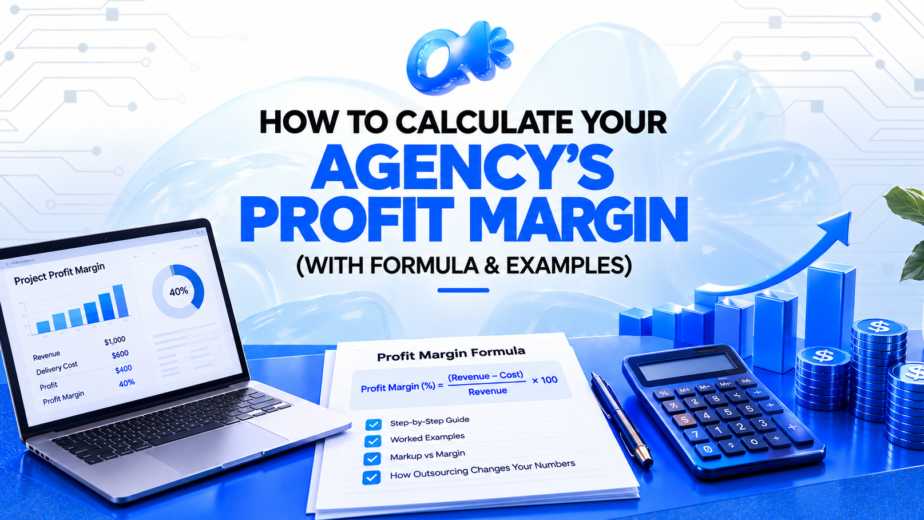
What it does to your margin (illustrative)
Say you charge a client $900 a month to manage Google and Meta campaigns. Your partner needs about 12 hours a month for optimization, reporting and creative tweaks, and you spend 2 hours reviewing at $40.
- Partner cost at $10 an hour: $120
- Your review time: $80
- Total cost: $200
- Profit: $700, a margin of about 77.8%
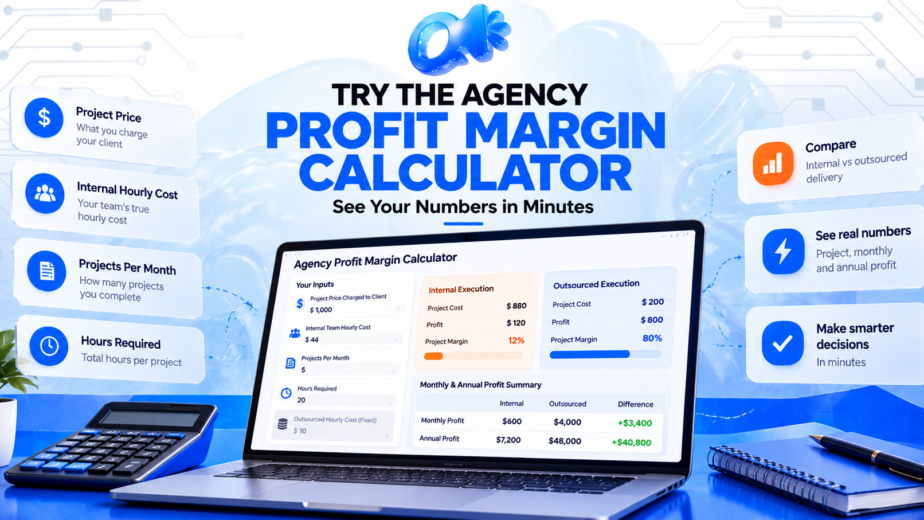
Those are hypothetical numbers. Actual hours depend on the number of campaigns, the platform mix and how much creative is involved. Build your own version with the Agency Profit Margin Calculator, and see How to Price Digital Marketing Services for Maximum Profit for setting retail prices.
How Reporting and Communication Should Work
Good ad reporting does three things: shows what happened, explains why and says what happens next.
Weekly or biweekly internal check-ins. A short note from your account manager on spend pacing, notable changes and any issues.
Monthly client report. Branded for your agency, covering spend, results, learnings and next steps.
Immediate alerts. If something breaks, such as a disapproved ad, a tracking failure or an overspend, you should hear immediately, not at month-end.
A shared task tracker. At Wordout Media, every agency gets one showing where each hour went, so reports never feel like a black box.
How to Protect Your Clients (and Yourself)
Put budgets in writing. Set monthly caps and who may change them.
Keep the client as owner of their accounts wherever possible.
Document access. Know who has it and remove it when no longer needed.
Test tracking before spending. A few small checks save a lot of money.
Start modestly. Launch with a conservative budget and scale as results prove out.
Be honest with clients about timelines. Ads need learning time, and early weeks are often about testing.
Never promise results. Promise process, communication and effort.
Check your contracts. If your agreements restrict subcontractors or require disclosure, follow them. This isn’t legal advice, so ask a qualified lawyer where needed.
Protect data. Client accounts and customer data need care, and an NDA with your partner is sensible.
Common Mistakes Agencies Make When Outsourcing Ads
Handing over accounts with no goals. “Get leads” isn’t a brief. Define target cost per lead, geography, offers and what a good lead looks like.
Sending traffic to a poor landing page. Great ads can’t fix a confusing page. Our Website Design & Development service often pairs with ad setup for this reason.
Judging too early. Judging campaigns after a few days leads to knee-jerk changes.
Not reviewing what comes back. You’re the quality gate.
Chasing the cheapest option. Very low prices usually mean little optimization.
Mixing up fee and spend. Clients should understand what they pay you versus the platforms.
Ignoring the sales side. Ads generate leads, but whether they become customers depends on follow-up. Our Automations + AI Workflows service can help with lead response.
How We Handle Paid Advertising at Wordout Media
Here’s our approach, described plainly.
- Platforms: Google and Meta, as covered in Paid Advertising – Google & Meta.
- What we do: campaign setup, copy, audiences, creative and optimization.
- Who does it: a specialist from our in-house team of fifteen, briefed by your dedicated account manager.
- Branding: 100% white labeled. Everything carries your logo.
- Turnaround: most ad setup tasks come back same day to 48 hours. Larger builds are scoped first.
- Visibility: a shared task tracker shows exactly where each hour went.
- Pricing: $10 an hour in blocks, with hours that don’t expire, usable across all six services.
- Trial: 8 hours free, no contract, no card, no sales call required first.
What we can’t promise: Results. We can’t control the auction, competitors or your client’s offer. What we can promise is careful setup, honest reporting and work you can review.
Where we may not fit: If you want a fully hands-off arrangement with no briefing, if you manage very large ad budgets that need a dedicated enterprise team or if your contracts require employee-only delivery, another provider may suit you better.
A Simple Way to Test a Partner
Before committing any real budget, run a small test.
- Pick one low-risk task. For example, a campaign structure review, ad copy and creative for one offer or a fresh Google Ads search campaign setup.
- Write a clear brief: goals, audience, location, offer, landing page and budget.
- Review the output for structure, tracking, copy quality and communication.
- Check what you’d have to fix. That shows how much supervision you’d need.
- Decide. If it’s good, move a live client across at a modest budget.
Our 8-hour trial is designed for exactly this kind of test.
Frequently Asked Questions
What is white label Google Ads management?
It’s an arrangement in which a partner plans, builds and optimizes Google Ads campaigns for your agency’s clients, with all reports and communication appearing under your brand.
What should I look for in a white label ads partner?
A clear account-access model, spend controls, proper conversion tracking, transparent reporting, a real optimization routine, creative capability, honesty about results, respect for platform rules, a consistent contact and genuine white labeling.
Who should own the ad accounts?
Ideally the client or your agency, with the partner given access. Avoid arrangements where the partner owns the account.
How much does it cost?
It varies: percentage of spend, flat monthly fees or hourly pricing. Ours is $10 an hour in blocks of 20, 40 or 80 hours. Ad spend itself is separate and paid to the platforms.
Can a partner guarantee results?
No. Results depend on the auction, competition, offer and landing page. Be wary of anyone who guarantees a return.
Does the highest bid win in Google Ads?
Not always. Google says the bid is one factor among several, including ad and landing page quality, so a more relevant ad can win at a lower price.
Can you manage both Google and Meta campaigns?
Yes. Our Paid Advertising – Google & Meta service covers both.
Will my client know you’re involved?
No. Everything is 100% white labeled.
How can I try before committing?
Use our 8-hour free trial with a real task. No contract, no card.
Choosing white label Google Ads management comes down to trust you can verify. Look for a partner who is clear about account access, careful with budgets, serious about tracking, open about reporting and honest about what can’t be promised. Ask who does the work, test with something small and review everything before it reaches a client.
Paid ads can be one of the best recurring services an agency offers, precisely because they’re measurable. Make sure your partner is as comfortable being measured as the ads are.
See Our Paid Advertising Google & Meta Service
Want to see what’s included before you decide?
See our Paid Advertising Google & Meta service and then claim your 8-hour free trial to test it on a real task. No contract, no card, no sales call required first. You can also read our FAQs or browse all services